………… he is tired of life! The immortal and perennially repeated words of Samuel Johnson.
I have always had a love-hate relationship with London – I studied there as a university student from 1967 to 1971, taking first a Bachelor’s Degree in Geography at University College London, and then a Master’s Degree in Soviet Foreign Policy at the School of Slavonic and East European Studies, now also part of University College.
I liked the fact that there was no rarefied spirit of being an elitist student, which might be the case being a university student in a smaller town. Students did not stand out in London. As soon as you left your college, you were immediately immersed and just another one of London’s 8 million inhabitants.
I enjoyed all the benefits of living in a big city. After a 10-week term, I was always ready to leave, but by the end of the vacation, I was looking forward to returning!
My first memory of London was short holidays with my parents staying in cheap Bed and Breakfast hotels in Earl’s Court and school trips, notably once to see the National Theatre perform Shakespeare’s ‘Othello’ at the Old Vic with Sir Lawrence Olivier and Maggie Smith in the lead roles. Quite a stellar cast!
I remember also once, as a teenager, breaking away from my parents and wandering around Soho (London’s so-called red light area), trying to decipher the notices next to doorbells describing the services ‘Sabrina’ or whoever offered in a 3rd floor walk-up!
I certainly had no regrets about studying in London, and after graduating taught in an inner London school for 4 months before spending most of the next 7 years living, working, and travelling overseas, for much of the time teaching in Sydney, Australia.
After returning to the UK in 1979, my wife and I established Casterbridge Tours, which kept us busy for the next 30 years, and we enjoyed living in a small hamlet (just 80 people) on the Somerset-Dorset borders, 110 miles west of London.
We made plenty of visits to London, and pretty much all were work related as we must have placed 2,000 groups in London over that period. Sometimes I accompanied groups, especially in the early days when I was their Tour Guide. Sometimes I met other Tour Operators who were mainly London based, when we were an active member of the British Incoming Tour Operators Association, and I couldn’t help thinking that out of London our quality of life was so much better. We could afford to buy much larger offices, our costs were lower, our homes were less expensive, and instead of commuting to work for up to an hour on an overcrowded, and hardly fit for purpose subway system (‘the Tube’), my biggest problem when I drove to the office was being held up by a herd of cows being taken to the farm for milking!
As I delegated more, my visits to London became increasingly infrequent and I have to admit that after living in Sydney and getting married in Vancouver, two of the most spectacularly located cities in the world, I found much of London dirty and squalid. Indeed as the years progressed, I found I was making more visits to London Airport each year to fly in or out of England than I was to central London!
Once we exchanged homes with a family in London and had a week’s family holiday in London, but I think over the years we took our kids to Paris for holidays more frequently than London. It was not a long journey from the south of England, and we could combine it with visits to other parts of France, and Paris was a lot cleaner. The streets were cleaned every night, the garbage collected, and it always struck me that Parisians had more pride in their city.
Around 2005, Sharron and I were in our mid-50s, our company had been fairly successful and we were operating between 200 and 250 groups for overseas school groups each year. At least 30% of these were coming to the UK and staying in London, and we were training and employing dozens of Tour Managers who needed somewhere to stay before they met groups, and also between one group departing and the next arriving, so I started thinking maybe either we or our company should buy an apartment or property in London. Our staff could use it when they had to visit London on business, and I thought that as we got older, my wife and I would have more inclination and spare time to enjoy theatre, concerts, and sports events in London.
We never did find a suitable apartment, but in 2007 our company paid £1.4m to purchase offices from a prominent Law Firm on Museum St in central London. Some of the Casterbridge team questioned my wisdom, but in fact this worked massively in our favour because our Bank, who had been established for almost 100 years and with whom we deposited all our long term cash deposits, was acquired by an Icelandic Bank and in the 2008 Financial crisis defaulted and was closed. Our Company would have lost the £1.4m deposited with them, but thanks to my purchase, we had spent the cash and had barely £100 on deposit.
No great prescience on my part, but Thank You London!
And as for our property on Museum St, we eventually got planning permission to make it into a shop on the ground floor and basement, which we could rent out for income, and 3 apartments on the upper floor and rear. However, we received multiple offers from our neighbour and instead sold the property for £300,000 profit despite a weaker real estate market at the time.
We sold Casterbridge Tours in 2011, and our one indulgence with the proceeds was for our family to finally acquire an apartment in central London.
In 2012, the Olympics were held in London, and despite the almost inbuilt cynicism and fears of many Britons, the Games were meticulously organised and a tremendous success, and gave Londoners a reaffirmed pride in their city.
Our family apartment is located in an attractive Art Deco Mansion Block located very centrally on Tavistock Square in Bloomsbury, a part of London forever associated with writers, artists, and academia. We are located less than a few hundred yards from University College London, where I studied, and Cartwright Gardens where I lived as a student almost 60 years ago. I guess this reaffirms that many of us have a tendency to return to our roots, or at least those areas with which we are comfortable and familiar, as we get older.
However, I still have mixed feelings about London.
When I go to Pattaya in Thailand or Mürren in Switzerland, I feel that I am coming ‘home’ – I feel a close connection to both places.
I have to say I do not feel that same connection with London, but I fully appreciate the privilege and benefit of having a second UK family home in the very centre of one of the world’s great cities and being able to walk to some of the world’s finest theatres, museums, galleries, and shopping areas.
I appreciate having somewhere to stay before I depart and when I return to the UK, and as I get older I hope to spend more time in London exploring the city and discovering lesser-known corners, attractions, markets, etc. There is a heap of guidebooks in our apartment, and I have planned several thematic walks in different parts of London which I want to explore. The only thing missing is time!
Whilst there are other cities I prefer to London I have no doubt that London is one of the world’s great cities, with a wealth of attractions to visit and enjoy, and that it is particularly appealing to travellers from English speaking countries like Canada, Australia, New Zealand, South Africa, India, and the USA, because nationals from these countries can immediately immerse themselves into the culture and activities without the problem of any misunderstandings due to language differences.
So, as I speak English passably, I am looking forward to discovering more of London in the years ahead, and meanwhile, I am happy to share some images I have taken in 2024 and 2025 when reprising my role as a tour guide with an overseas friend.
No commentary but just images of places you may or may not be familiar with, including 3 indulgences – an author’s privilege!
You can always message me if you want further information!
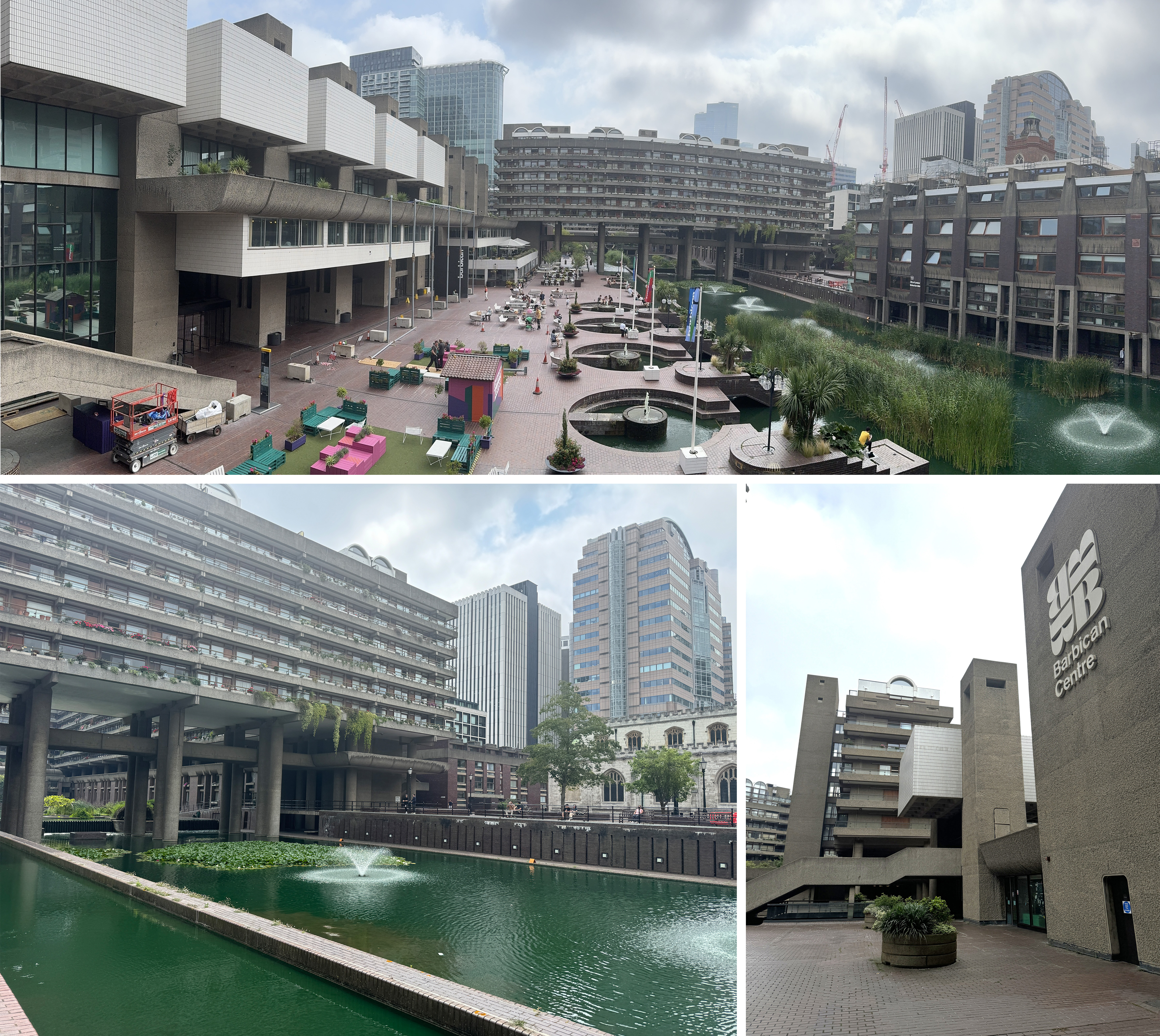
The Barbican
The Barbican is both a residential complex of 2,000 homes, as well as the largest Arts Centre in Europe. It is the supreme example of British Brutalist architecture.
Bloomsbury
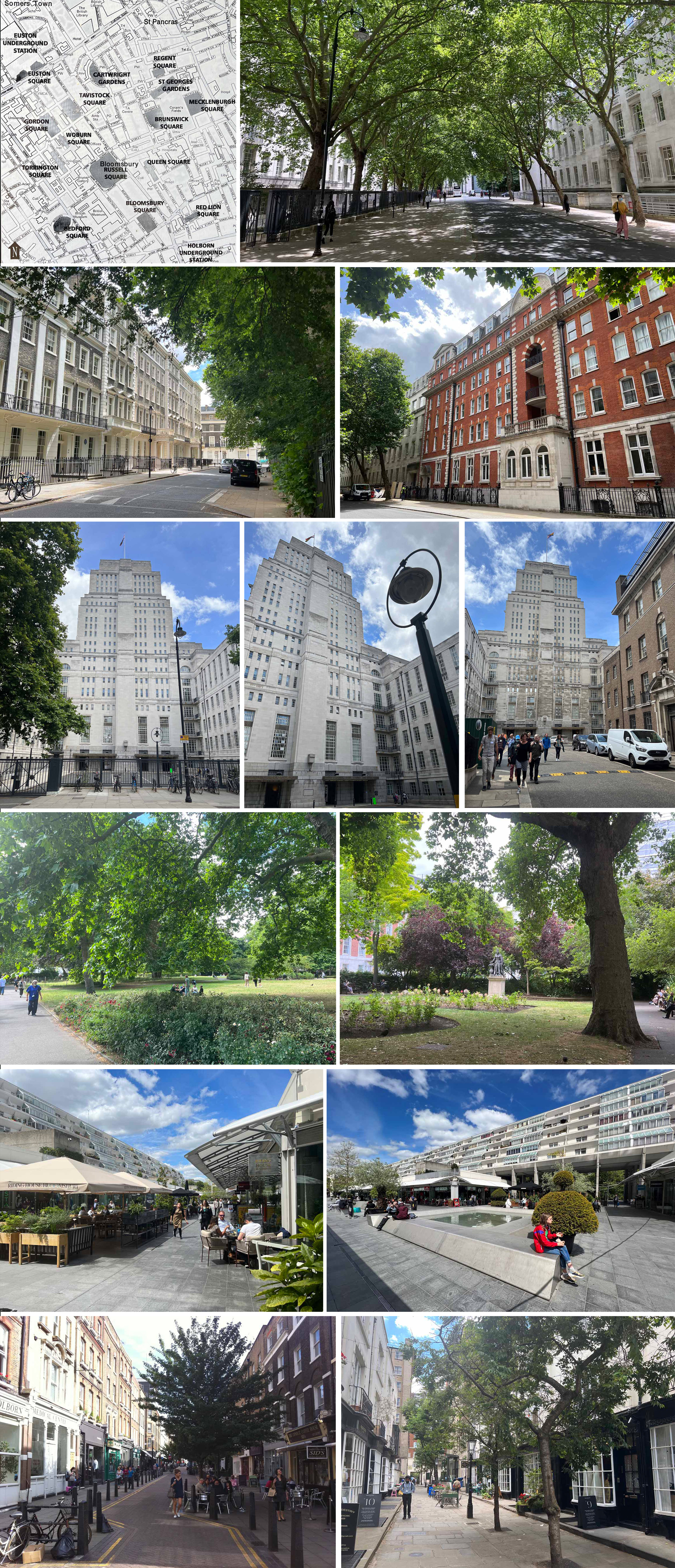
Bloomsbury is an area of central London where I have lived and studied, and which is long associated with intellectuals, writers, education, and medicine. It is the home for both the British Museum, University College London, and Senate House, the massive Art Deco Administrative headquarters of London University. It is characterised by its wealth of Georgian and Victorian architecture and 11 beautiful and peaceful Squares and two Gardens, the most well known being Russell, Tavistock, Gordon, Woburn, Bloomsbury, Queen and Brunswick Squares. The Brunswick Centre, designed in the mid 1960s as a mixed use residential and shopping centre located between Brunswick and Russell Squares, was considered very radical at the time.
Buckingham Palace
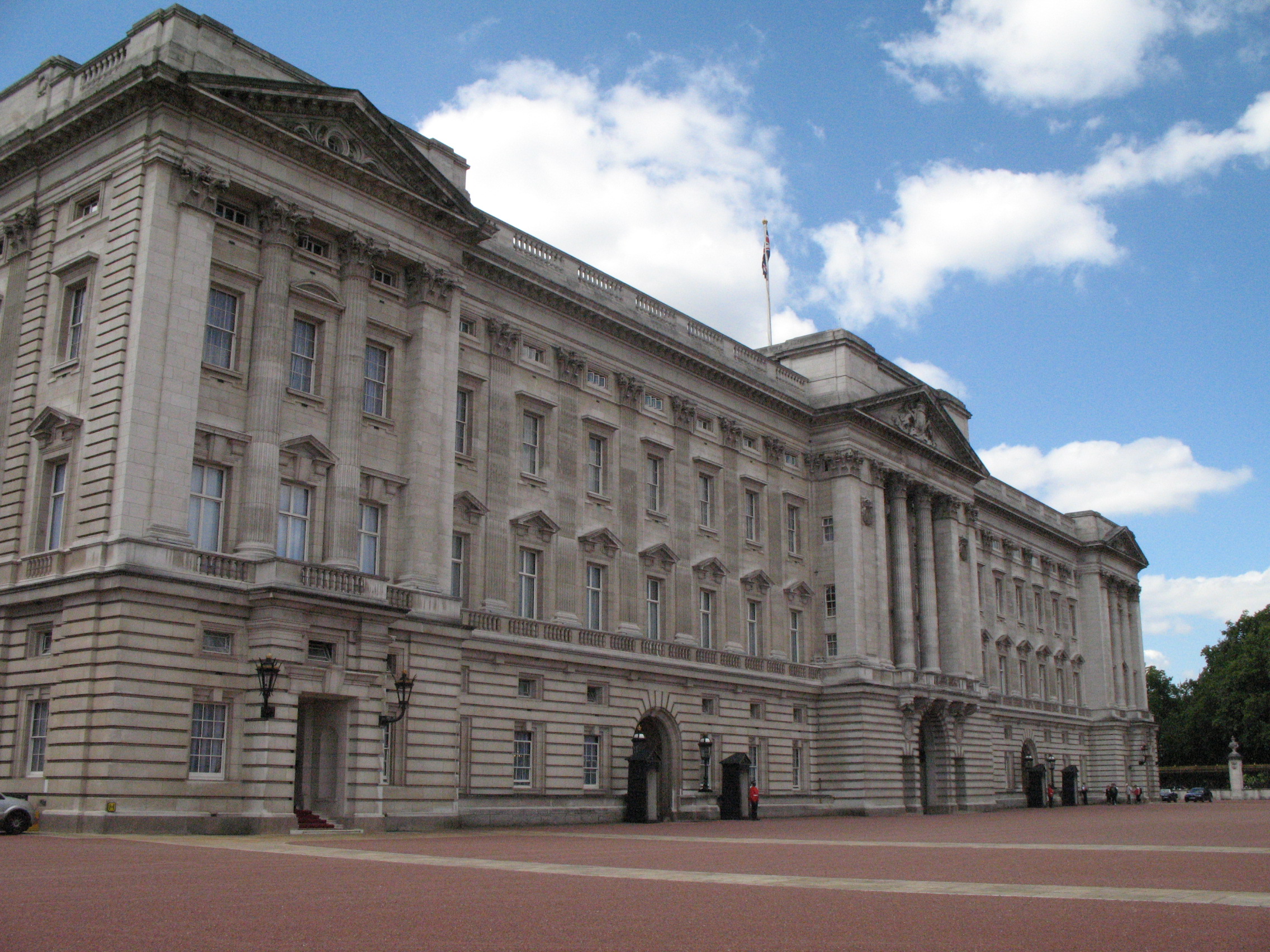
The official London residence of the British monarch is forever popular with tourists, and it is outside the Palace where Britons will always gather on great State occasions.

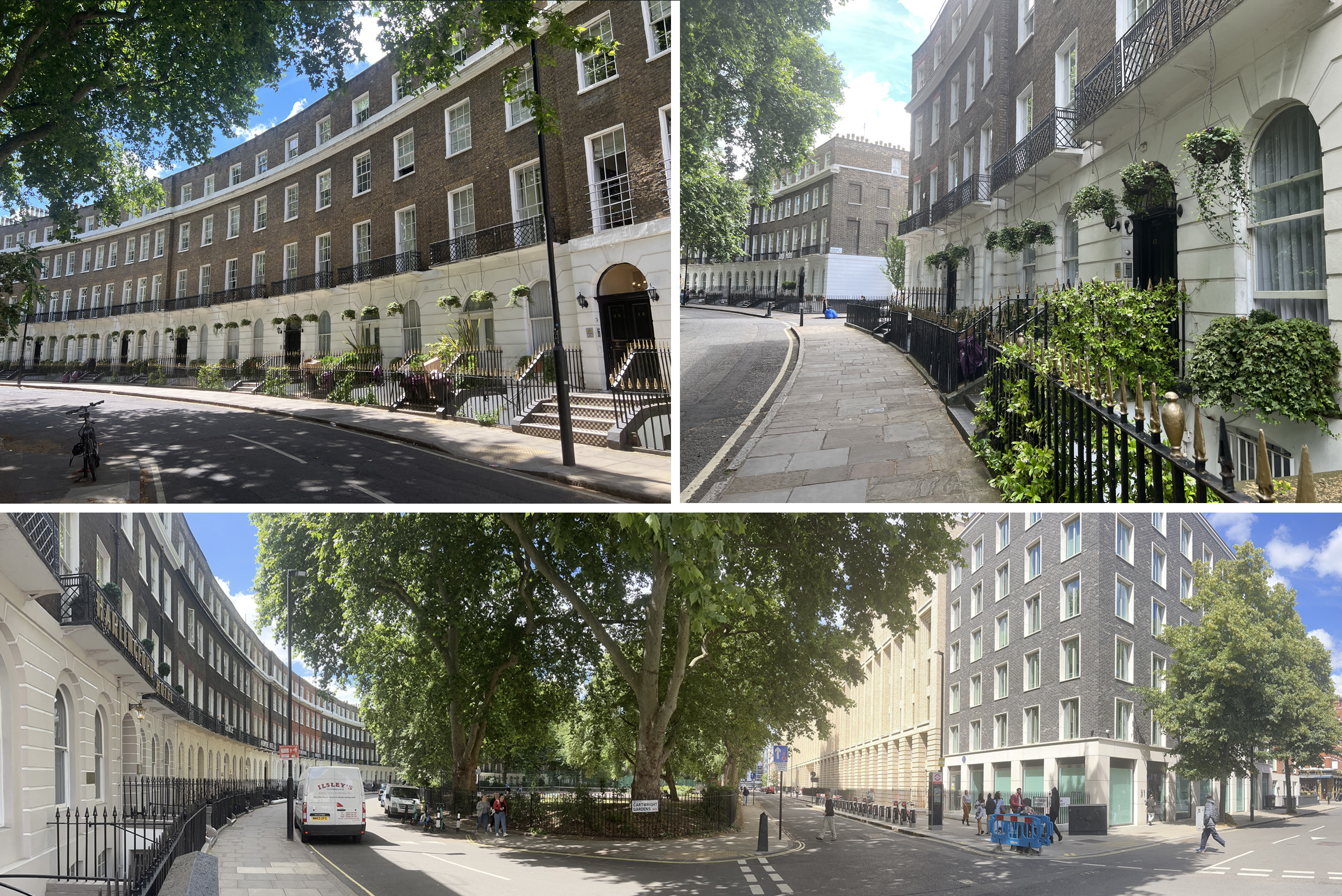
Cartwright Gardens
I have a soft spot for Cartwright Gardens because after wanting to quit my university studies, I returned to stay in a bed and breakfast in Cartwright Gardens and somehow passed my end of first year exams. For the next two years I lived in a student hall of residence in Cartwright Gardens.
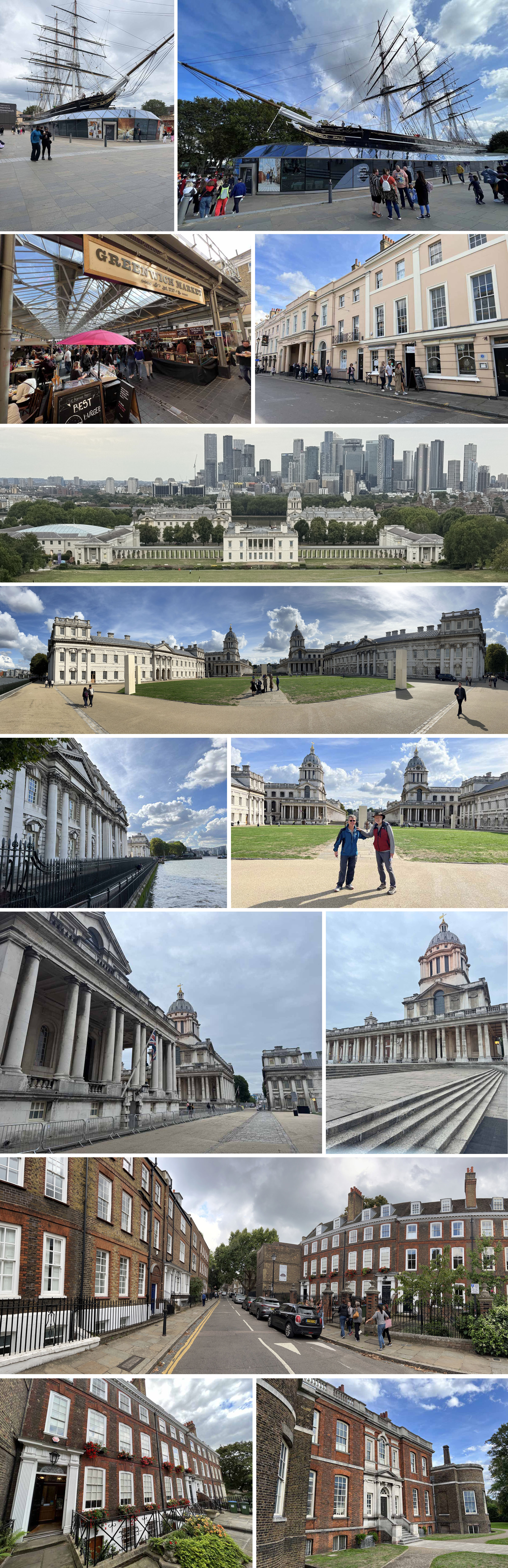
Greenwich
Greenwich, just a few miles downstream from Tower Bridge, is the favourite part of London for many visitors and residents alike. Greenwich is well worth a full day’s excursion travelling down the Thames by boat past many of London’s best known sights and I have made the trip 3 times in recent years with both family and friends. There is much to see in Greenwich, including the Cutty Sark, an outstanding example of a British Clipper ship, the National Maritime Museum, and the Royal Observatory with the Greenwich Meridian line. Maritime Greenwich has been designated as a World Heritage Site, and the magnificent historic buildings of the Old Royal Naval College form one of England’s most impressive architectural attractions and are now the home of the University of Greenwich. There is a wealth of interesting and historic buildings, and also an excellent craft market to explore.
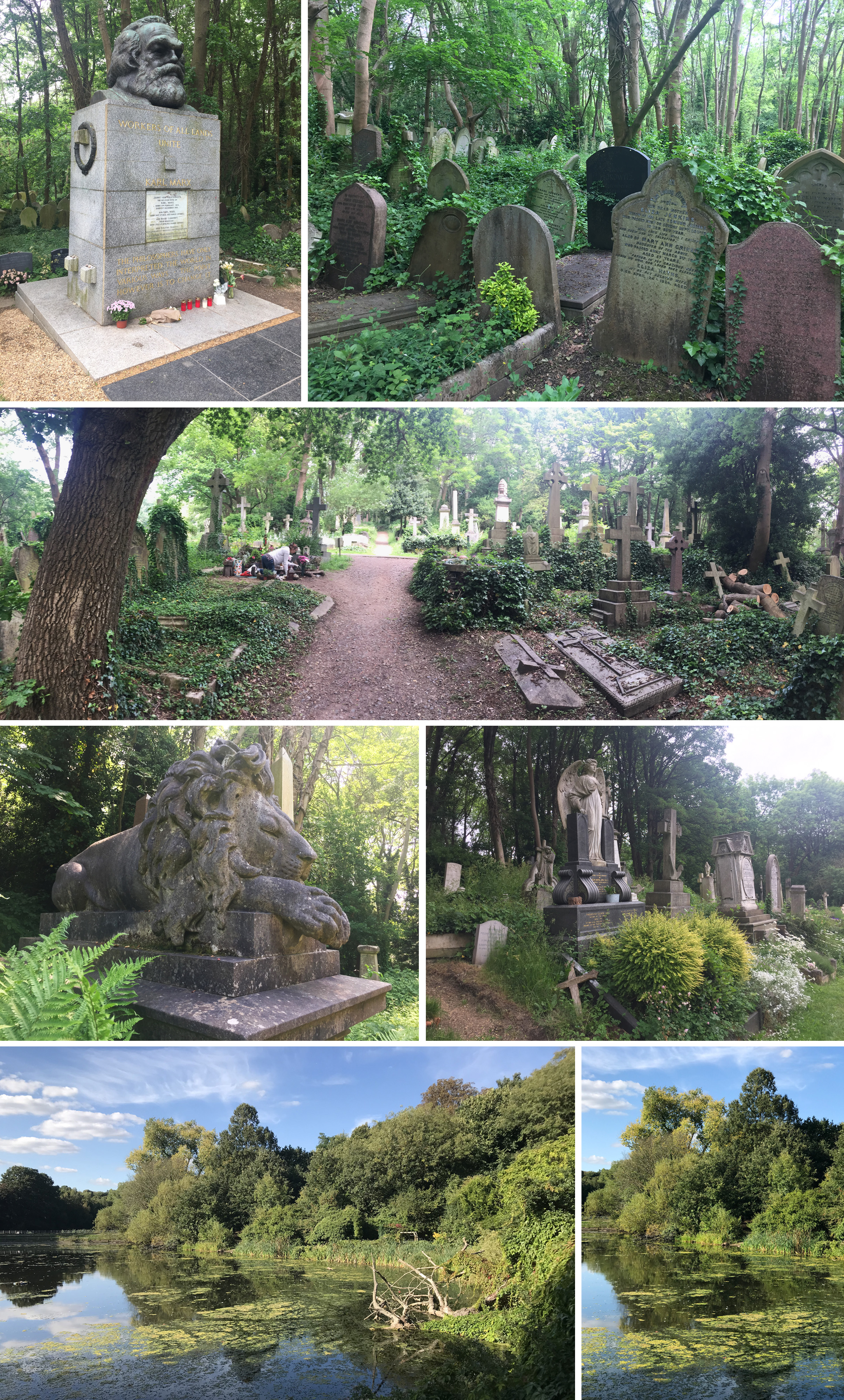
Highgate
Highgate, still sometimes referred to as a village, is well known for its extensive and historic cemetery where Karl Marx is buried. The Heath offers many opportunities for relaxing walks.
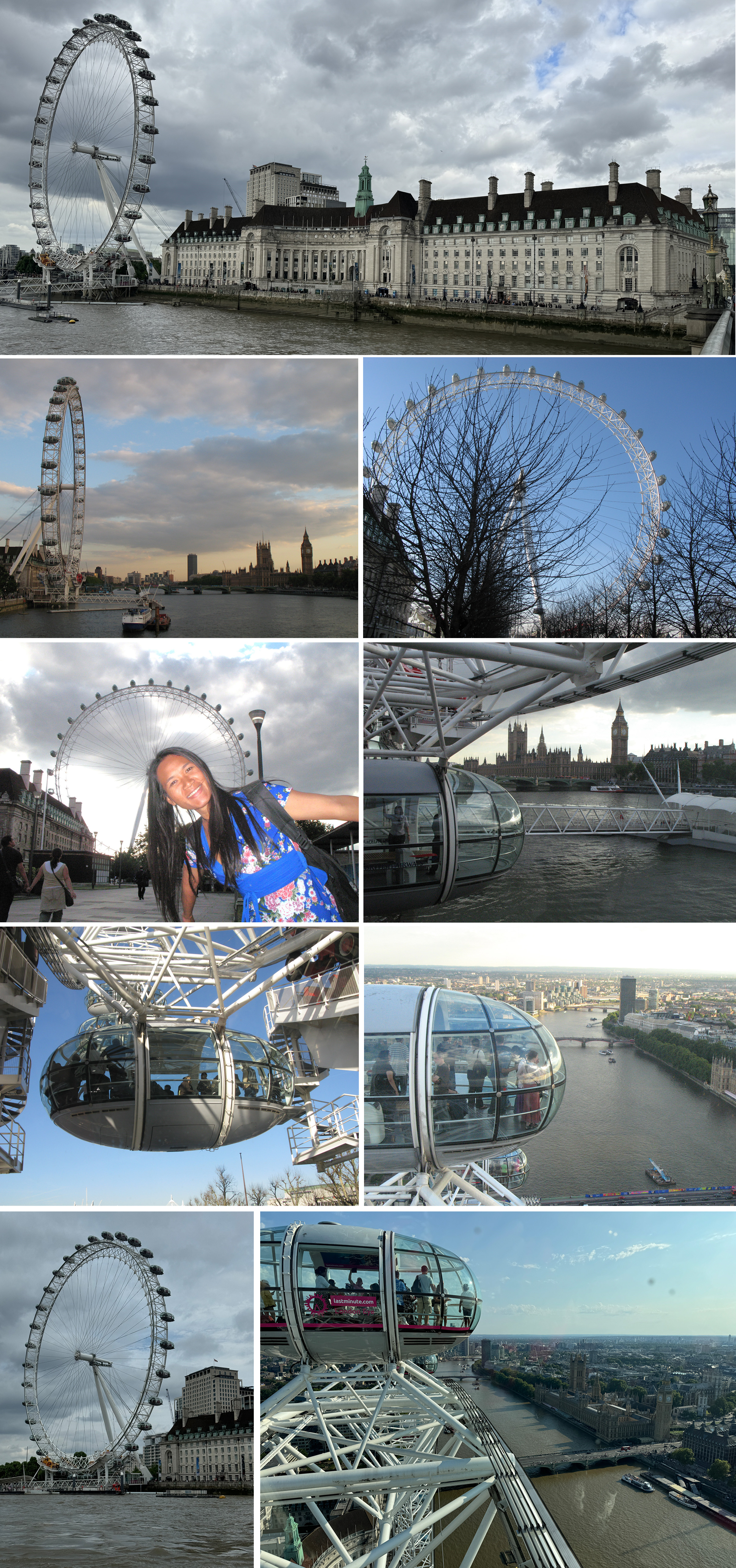
The London Eye
The Observation Wheel was opened in 2000 to celebrate the new Millennium and, with over 3 million visitors annually, is the UK’s most popular paid tourist attraction. At 135 metres tall it was the highest public viewing area in London until the Shard opened in 2013.
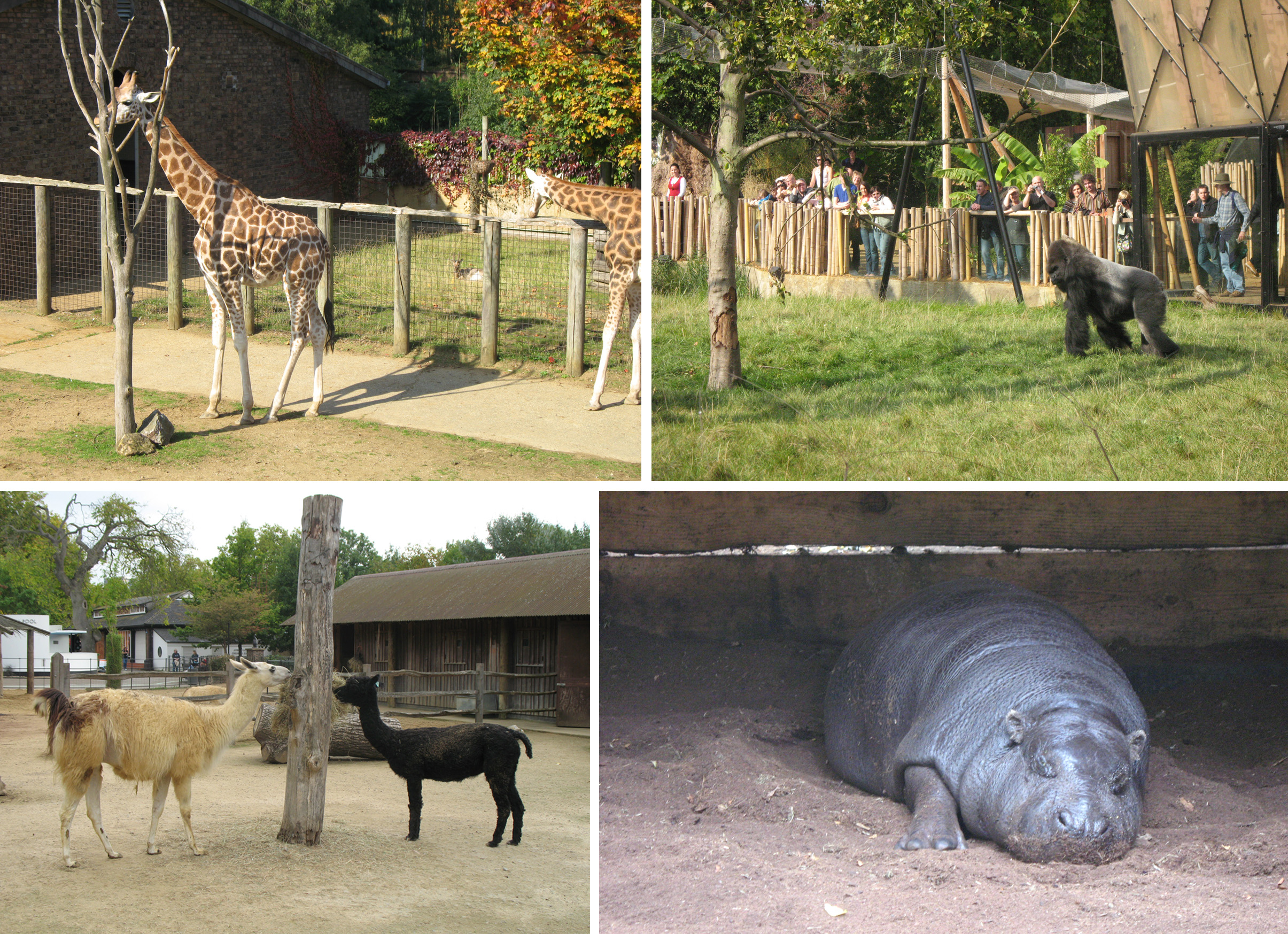
London Zoo
The London Zoo opened in 1828 and is commonly considered to be one of the world’s finest zoos.
Madame Tussauds
Dating from 1835 and on its present site since 1883, the wax museum has been a major tourist attraction in London for well over 100 years. As well as displaying the waxworks of famous historical characters, an ever-changing display of contemporary political, sporting, film, musical, and TV personalities keeps the museum fresh, and a visit is always great fun. The Museum has been such a success that there are now branches in cities spread across 4 continents.

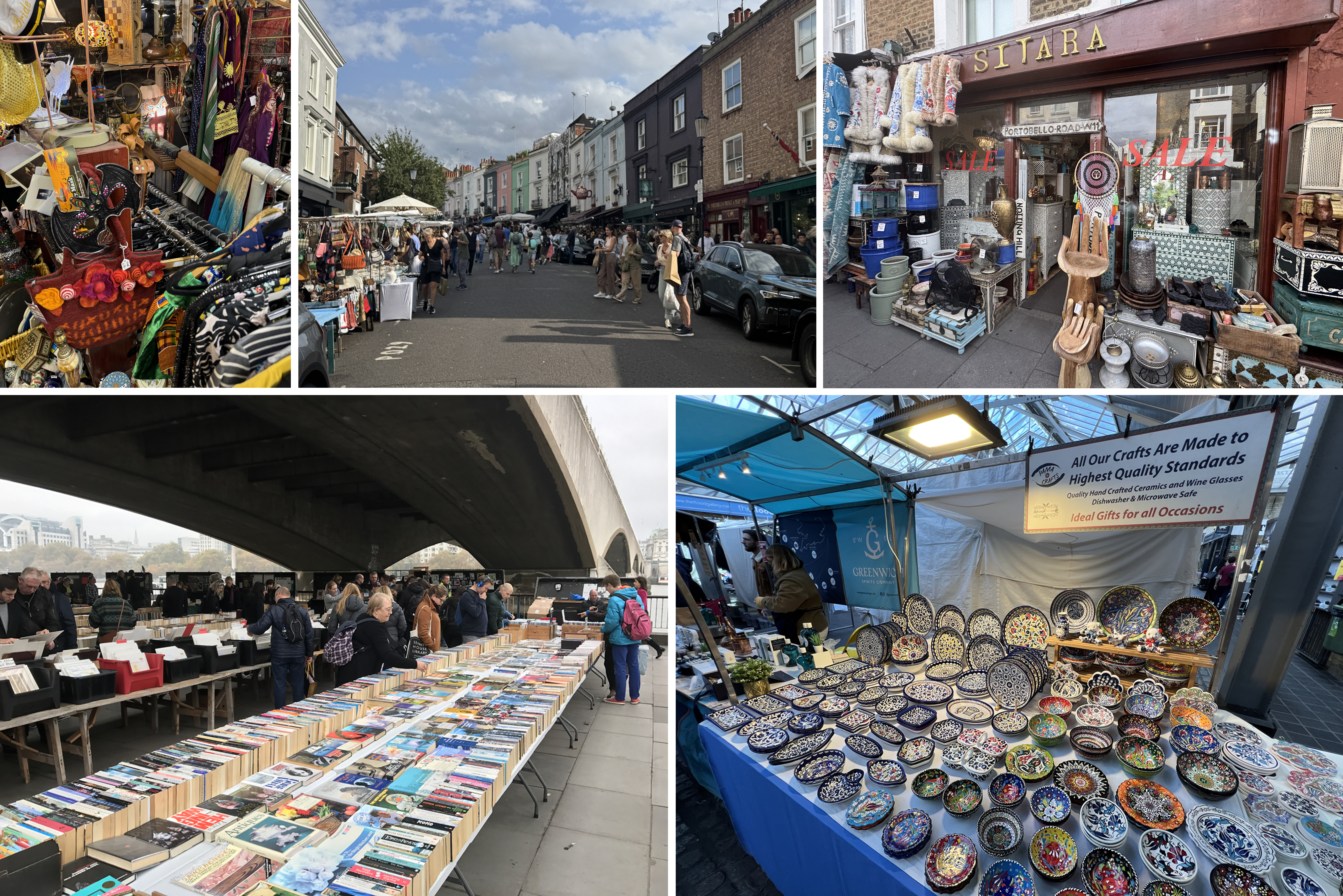
London’s Markets
There is no shortage of interesting and colourful markets all over London. Petticoat Lane and Portobello Road are long established and famous worldwide, and Camden Markets are a favourite of the younger set. I can always find items to save for Christmas and Birthday Presents whenever I visit Greenwich Market. Antiques, Clothes, Books, Stamps, Food…….whatever your interest, there will be a market for you.
The New London Skyline
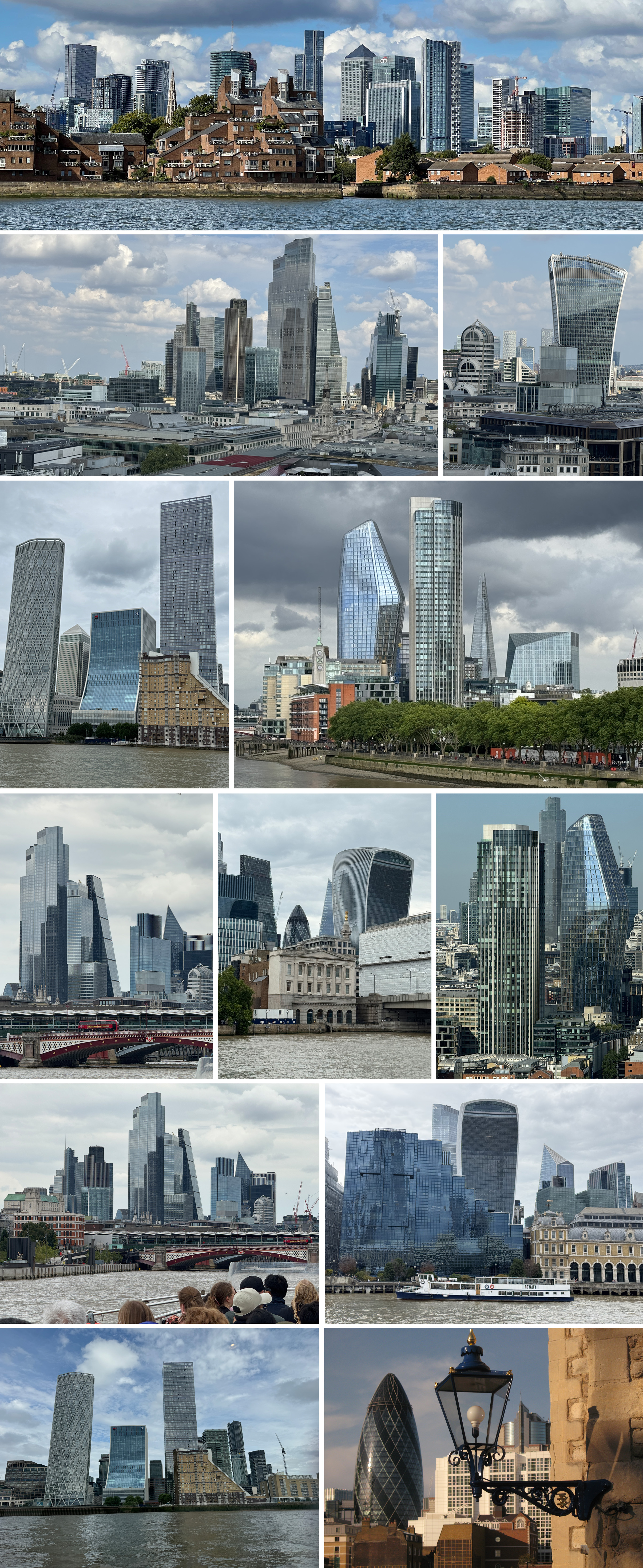
For many years, London was the one major European city that disavowed high rise commercial construction, but this began to change in the 1980s, kick-started by the development at Canary Wharf. In the last 30 years, the London skyline has been transformed with countless new developments; some admired, others detested, and many controversial. Many have been playfully given nicknames based on their appearance, which have quickly become widely used like the Gherkin, the Cheesegrater, the Walkie Talkie, the Jenga, and of course the Shard, which was given its name officially. A boat ride from Westminster to Greenwich will give you the opportunity to view many of these new developments, and although we all resist change to an extent, only the most churlish would not concede that there have been some outstanding designs added to London’s skyline.
Museum St and the British Museum
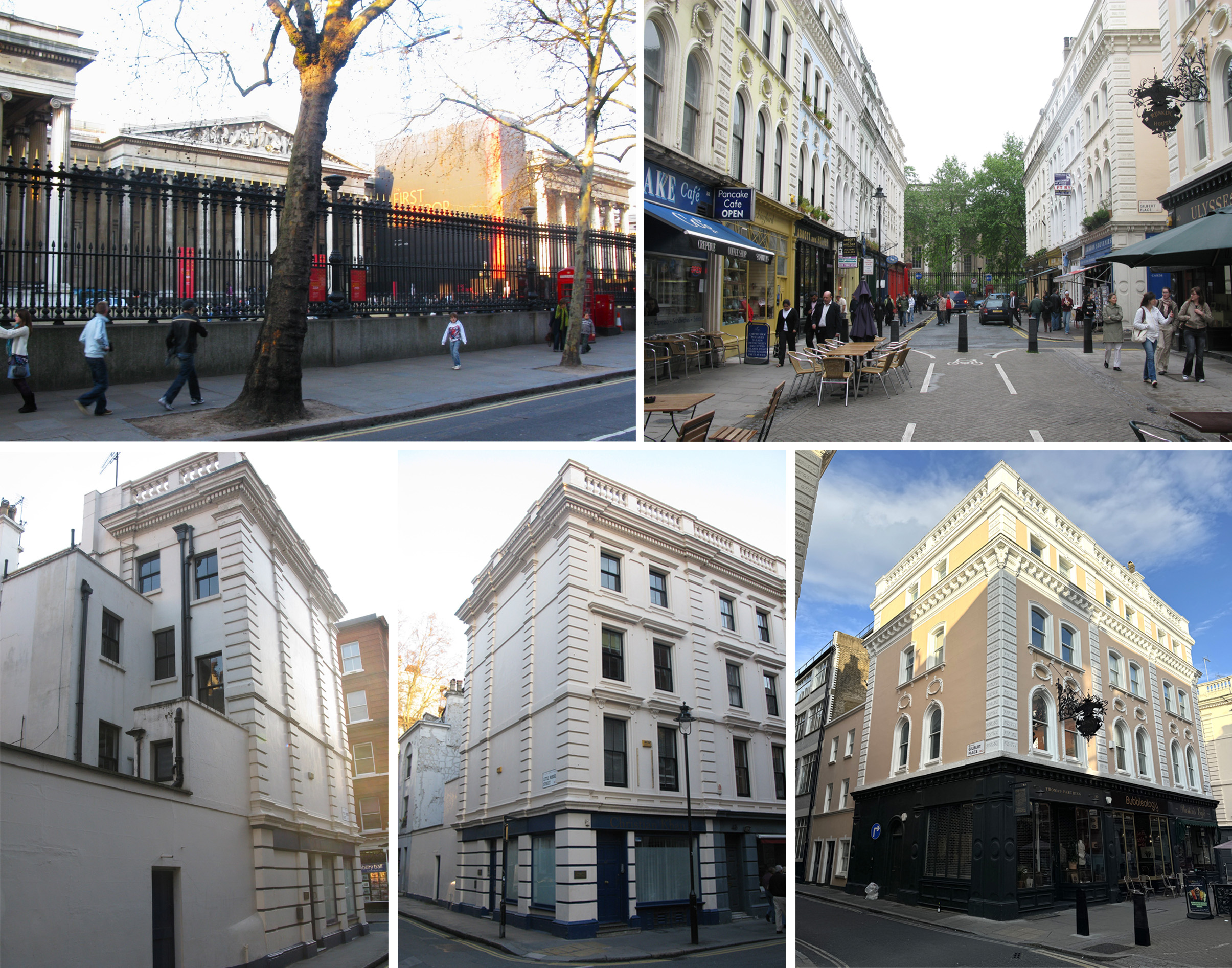
An indulgence here. In 2007, our company, Casterbridge Tours, purchased a building on Museum St in central London, about 100 metres away from the British Museum, one of the worlds great Museums by any account. We secured planning permission to develop the rear of the property and planned to undertake the work when we received the proverbial offer we could not refuse. Today our plans have been realised and the building restored with little expense spared, and the building makes a very positive and pleasing contribution to the Bloomsbury Street scene around the Museum.
The National Gallery and Trafalgar Square
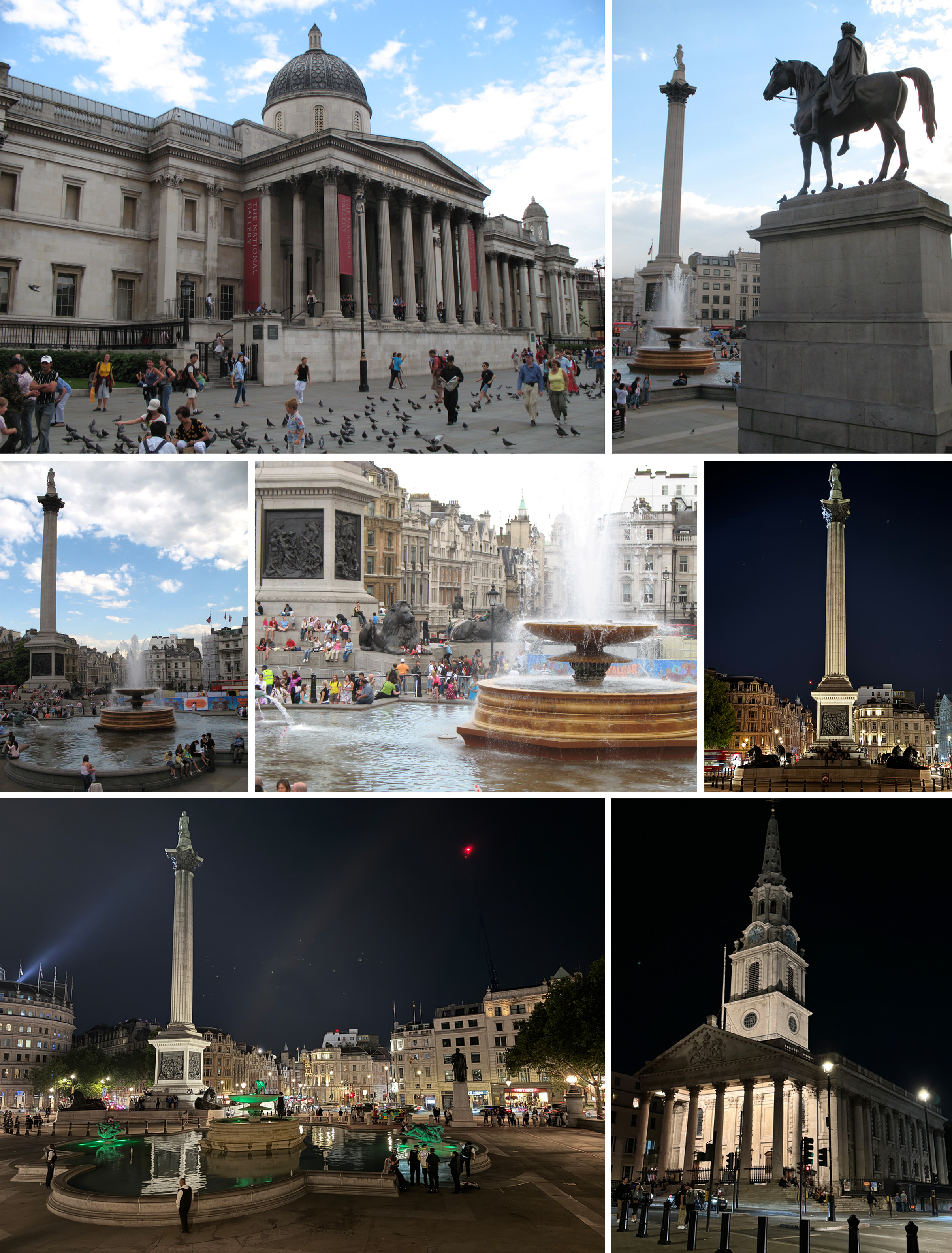
The National Gallery, one of the world’s great Art Museums, is situated on Trafalgar Square, which is London’s premier meeting point for both protests and celebrations. Nelson’s Column, one of London’s most famous landmarks which celebrates Horatio Nelson’s victory over the French at the Battle of Trafalgar in 1805, is the centrepiece of Trafalger Square. The neoclassical church of St Martin in the Fields, dating from 1726, is also located by Trafalgar Square.
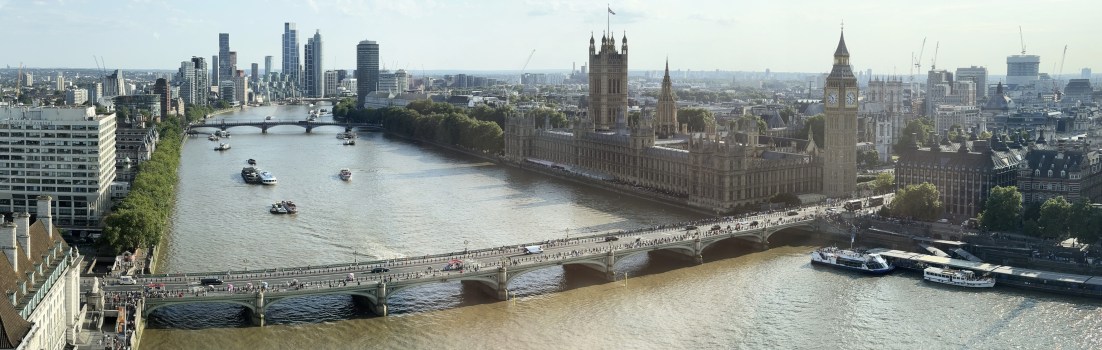
The Houses of Parliament and Westminster
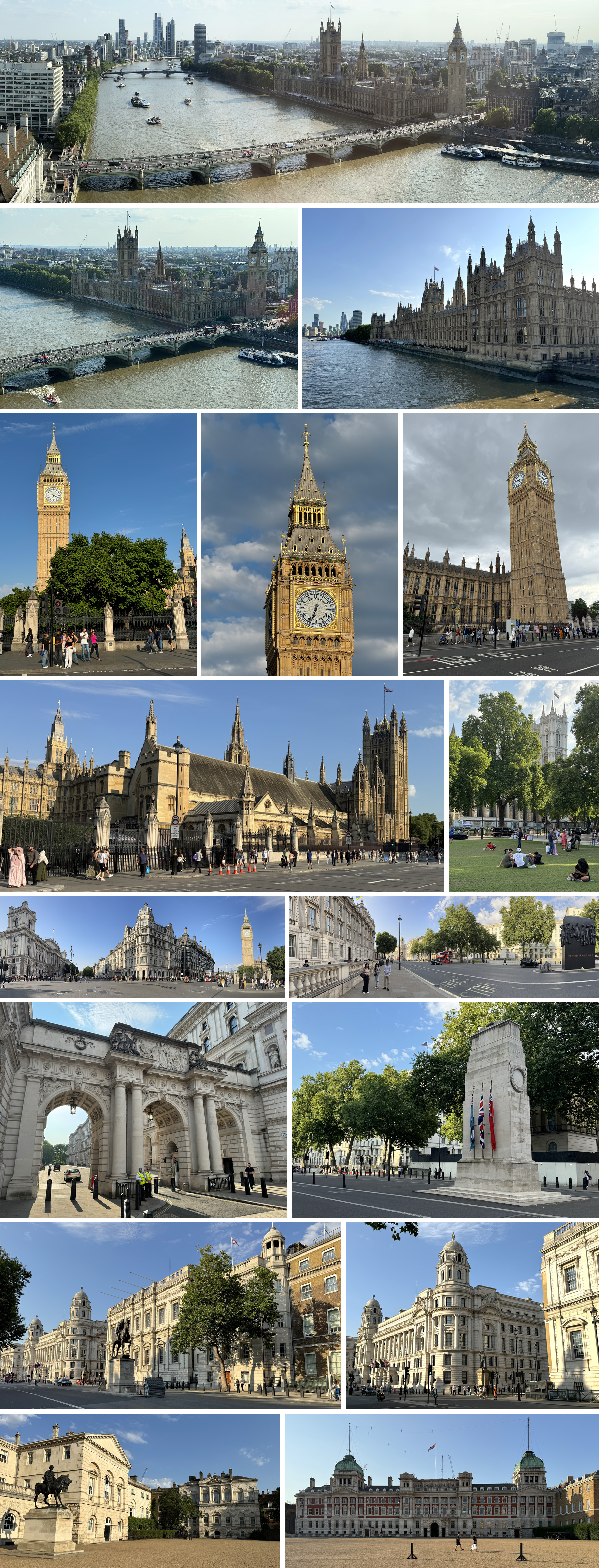
Westminster is the home of the UK Government and the Houses of Parliament, comprising the elected lower House of Commons and the unelected upper House of Lords. Whichever party or coalition holds a majority in the lower elected house forms the government, and the leader of the majority becomes the Prime Minister. Because of its longevity, the British Parliament is often described as the ‘Mother of Parliaments’. Ironically, despite having a degree and keen interest in politics and having visited parliaments in various countries all around the world, I have never set foot in the British parliament despite having arranged many visits for American student groups! One always ignores what is on one’s own doorstep!
In addition to the Palace of Westminster, many other famous buildings are located in the vicinity of Parliament Square. Big Ben is the nickname for the Great Clock of Westminster and by extension for the clock tower itself which stands at the north end of the Palace of Westminster. It dates from 1859 and is perhaps London’s most famous landmark.
Westminster Abbey dates from 1245 and is the final resting place of many famous British notables, and is closely associated with the Royal Family. It was the location for the funerals of Princess Diana in 1997 and Queen Elizabeth in 2022.
Whitehall, with many splendid historic buildings and monuments, connects Parliament Square with Trafalgar Square. Horse Guards Parade, where the Trooping of the Colour takes place, is located just off Whitehall.
Picadilly Circus and Regent St
Regent St dates from 1825 and combines the sweeping curves of elegant Victorian architecture with upmarket shopping. It leads to Picadilly Circus in the very heart of London’s West End or Theatreland. Picadilly Circus and the Statue of Anteros (often mistakenly referred to as Eros!) remain one of London’s iconic locations.

The RAC Club and Pall Mall
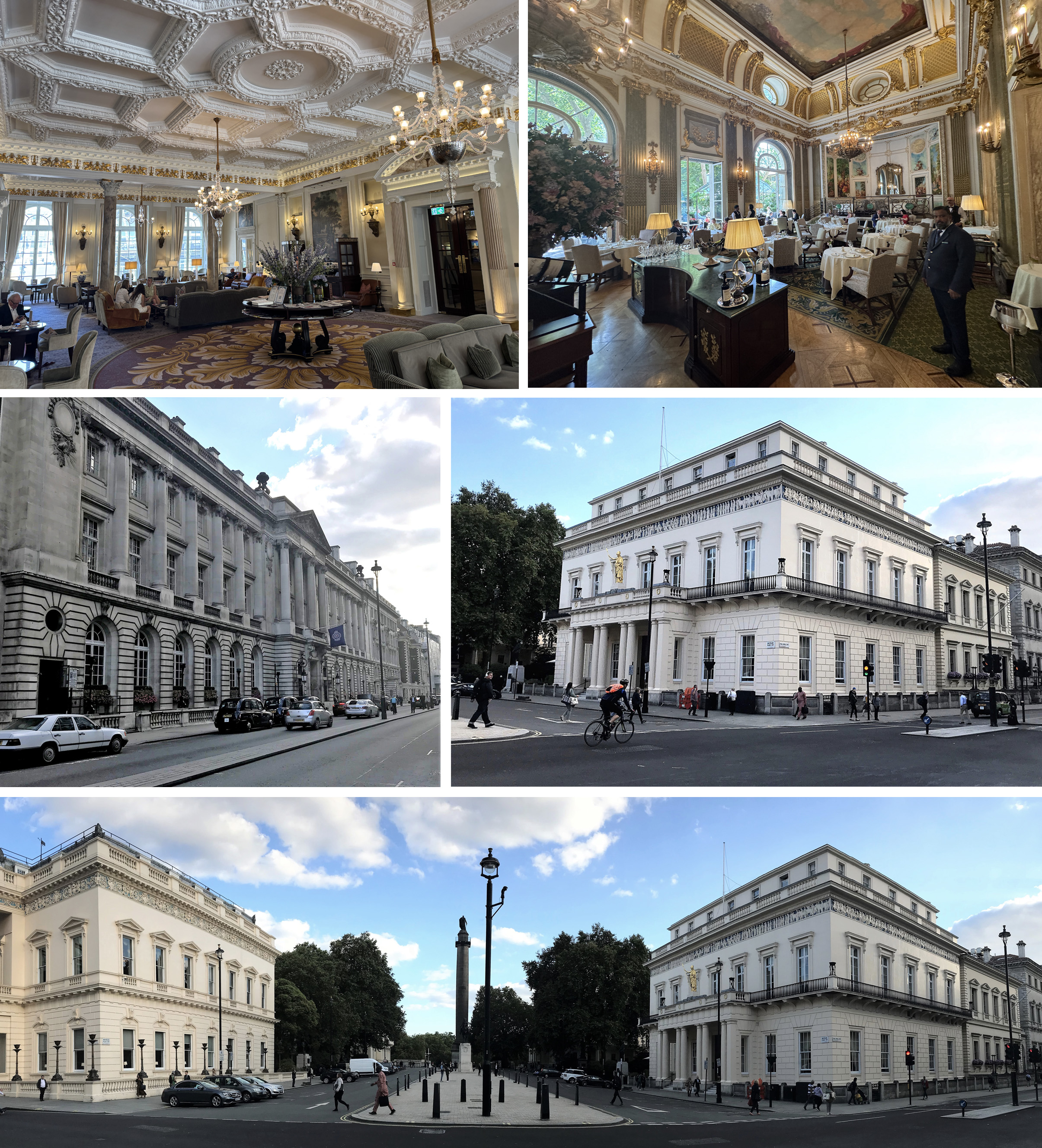
I was recently invited to the RAC Club to play two backgammon matches in very celebrious surroundings. I was so distracted by the splendid art and furnishings that I was easily defeated by my gracious host. The RAC (Royal Automobile Club) is situated in just one of the many splendid historic buildings that adorn Pall Mall, which links Trafalgar Square with James Street. The Athenaeum (illustrated below), Reform, and Travellers Clubs are other famous 19th Century clubs still located on Pall Mall.
The Regent’s Canal
The Regents Canal crosses London just north of the central area and connects Paddington with the Limehouse Basin on the River Thames. The Canal makes a delightful walk that can be combined with Camden Markets and/or Regent’s Park and London Zoo. The walk will take you past residential houseboats (narrowboats), former warehouses and gasworks converted to residential apartments, splendid houses, options for dining, and even an open-air free cinema on selected summer evenings!

The River Thames
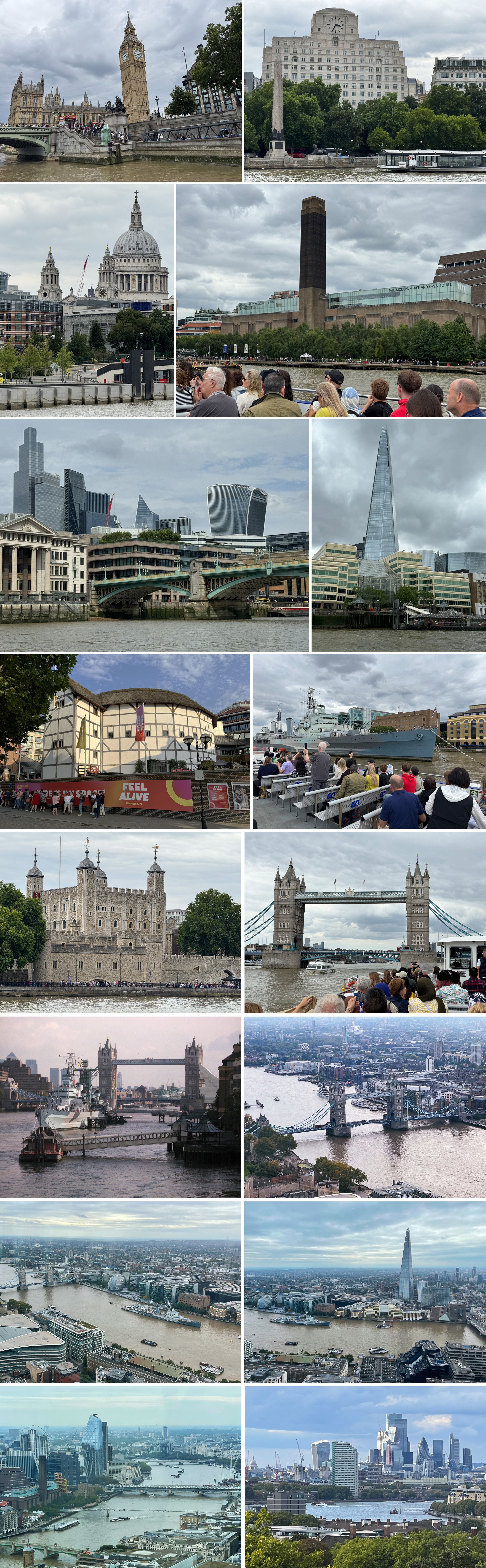
The Thames is far from a significant river in global terms, although it is the second longest river in the United Kingdom. A boat trip from Westminster to Greenwich is a relaxing way to see many of London’s iconic attractions from the water, including the Houses of Parliament, Shellmex House, St Pauls Cathedral, The Tate Modern Gallery, The Walkie Talkie/Sky Garden, The Shard, Shakespeare’s Globe Theatre, HMS Belfast, London Bridge, and Tower Bridge.
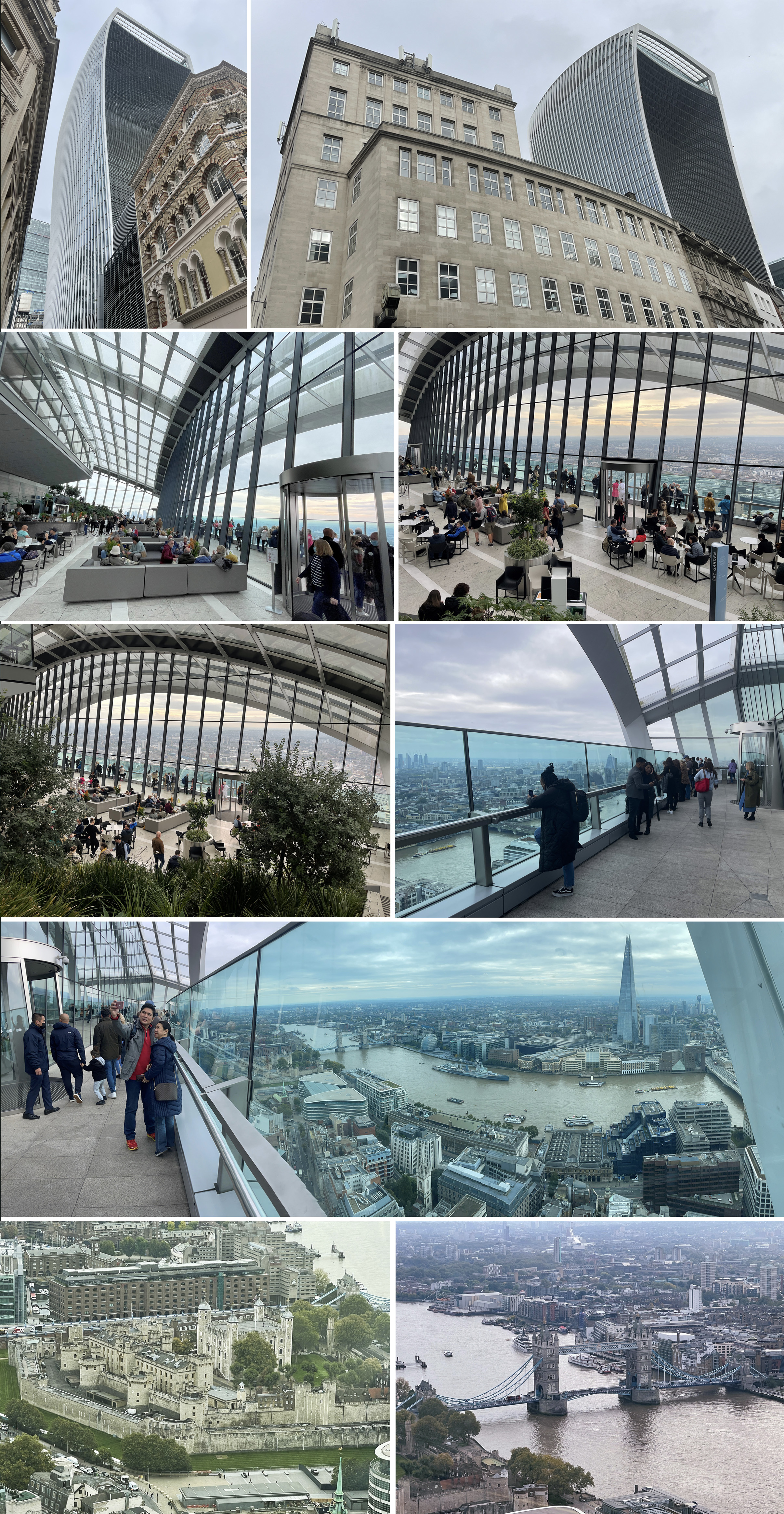
The Sky Garden at 20 Fenchurch St (‘The Walkie Talkie’)
The Sky Garden is an elevated Garden area occupying the 35th, 36th, and 37th floors of this distinctive commercial skyscraper located in the City of London financial area. Its nickname is because of its resemblance to a walkie talkie handset. Access is free of charge, and visitors are rewarded with magnificent views all over London but particularly of the Tower of London, Tower Bridge, and The Shard. It is essential to make reservations in advance due to the popularity of this wonderful facility.
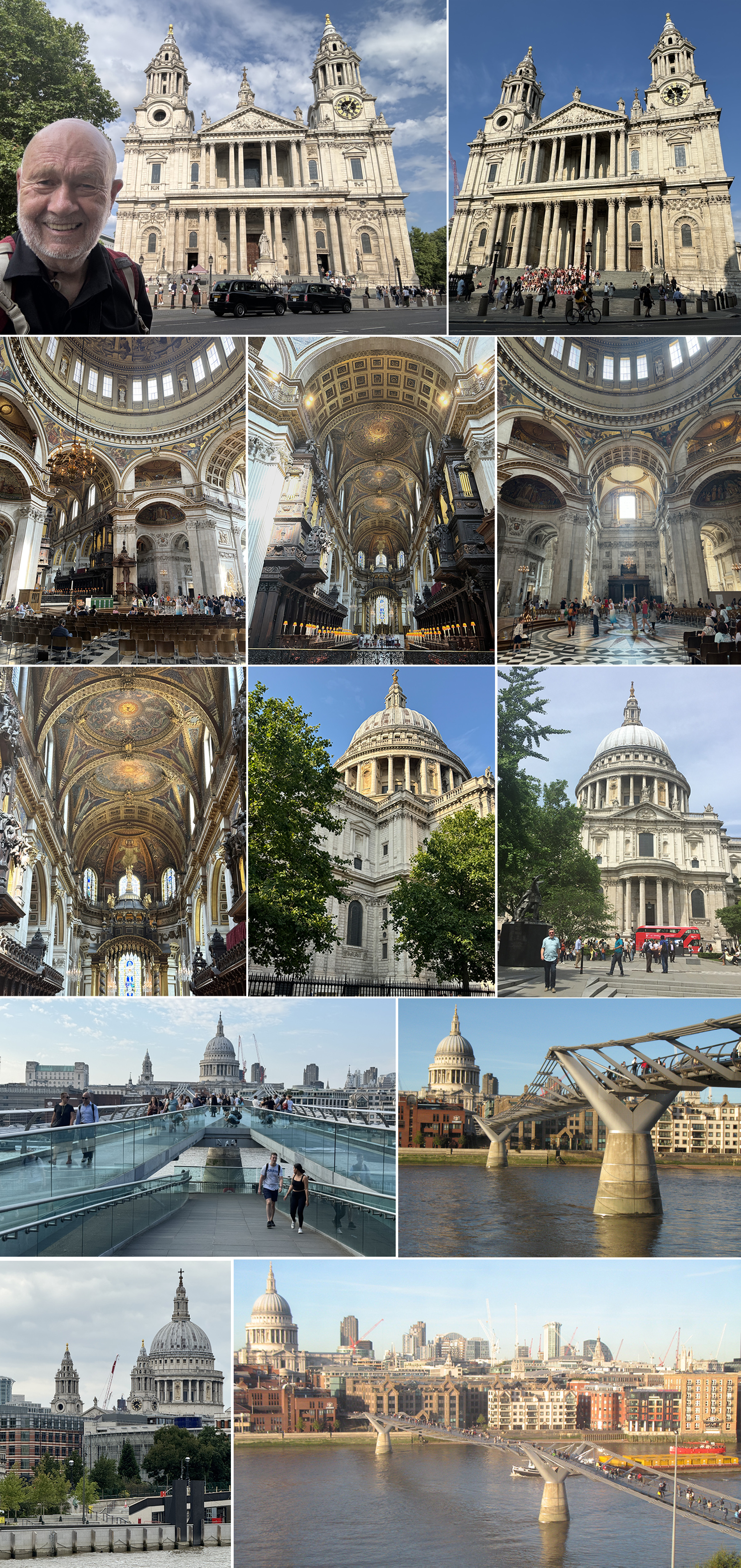
St Paul’s Cathedral
The high domed cathedral was designed in Baroque style by Sir Christopher Wren and dates from 1710. It is one of the most famous and recognisable sights of London, and remarkably was the tallest building in London from 1710 to 1963. The building survived the German bombing blitz of the Second World War unscathed and offers extensive views over London for those fit enough to climb the 528 steps to the Golden Gallery viewing area. St Paul’s hosted the wedding of Prince Charles and Lady Diana Spencer and the funerals of Winston Churchill and Margaret Thatcher.
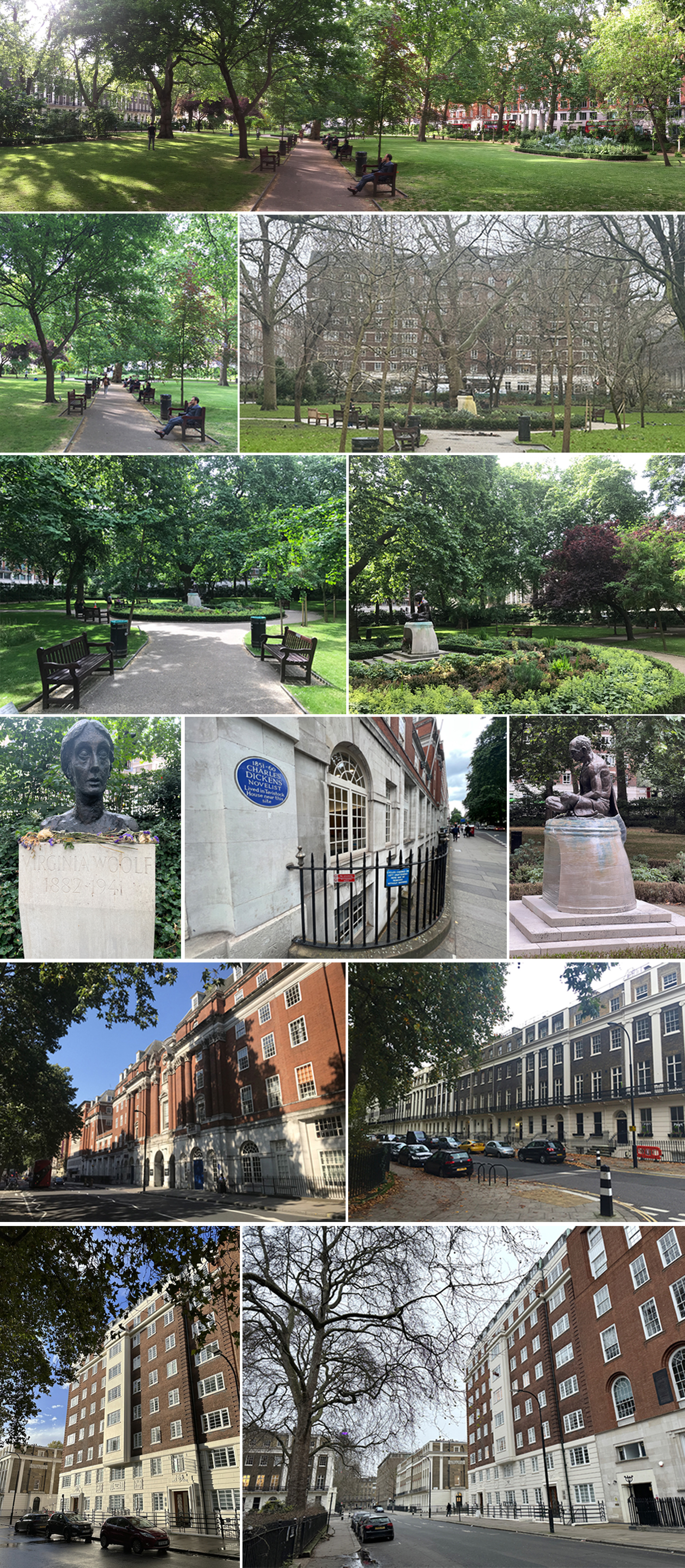
Tavistock Square
OK – another indulgence. Tavistock Square is one of the most famous of the Bloomsbury Squares, and where our family has had a home since 2015.
The centre piece of Tavistock Square Gardens is a statue of Mahatma Gandhi. Together with the Hiroshima Cherry Tree planted in 1967 (and recently removed!) and the Conscientious Objectors Commemorative Stone, this has resulted in the Square being unofficially regarded as a Peace Park with various annual ceremonies. Both Virginia Woolf (a prominent member of the Bloomsbury Set) and Charles Dickens lived on Tavistock Square. This was also the scene of one of the four suicide bombings on July 7, 2005, that killed 13 passengers in the bus that exploded on Tavistock Square.
Notable buildings on the Square include BMA House designed by the famous architect Sir Edwin Lutyens in 1911 and the headquarters of the British Medical Association, the Tavistock Hotel, Connaught Hall, an early 19th century building that is now a University of London Hall of Residence and Tavistock Court, a 1935 Art Deco Mansion Block complete with Art Deco Relief panels adorning the exterior.
We consider ourselves very fortunate to have an apartment in the very centre of London and within walking distance of the British Museum, three mainline railway stations, including the Eurostar terminal at St Pancras, and 3 underground stations within a 7-minute walk with direct connections to just about every part of London and Heathrow Airport. We could not have dreamed of a better location because there are also direct buses every 7 minutes to Waterloo Station, where we can take an hourly train to Templecombe station in the West Country, only three miles from our family home.
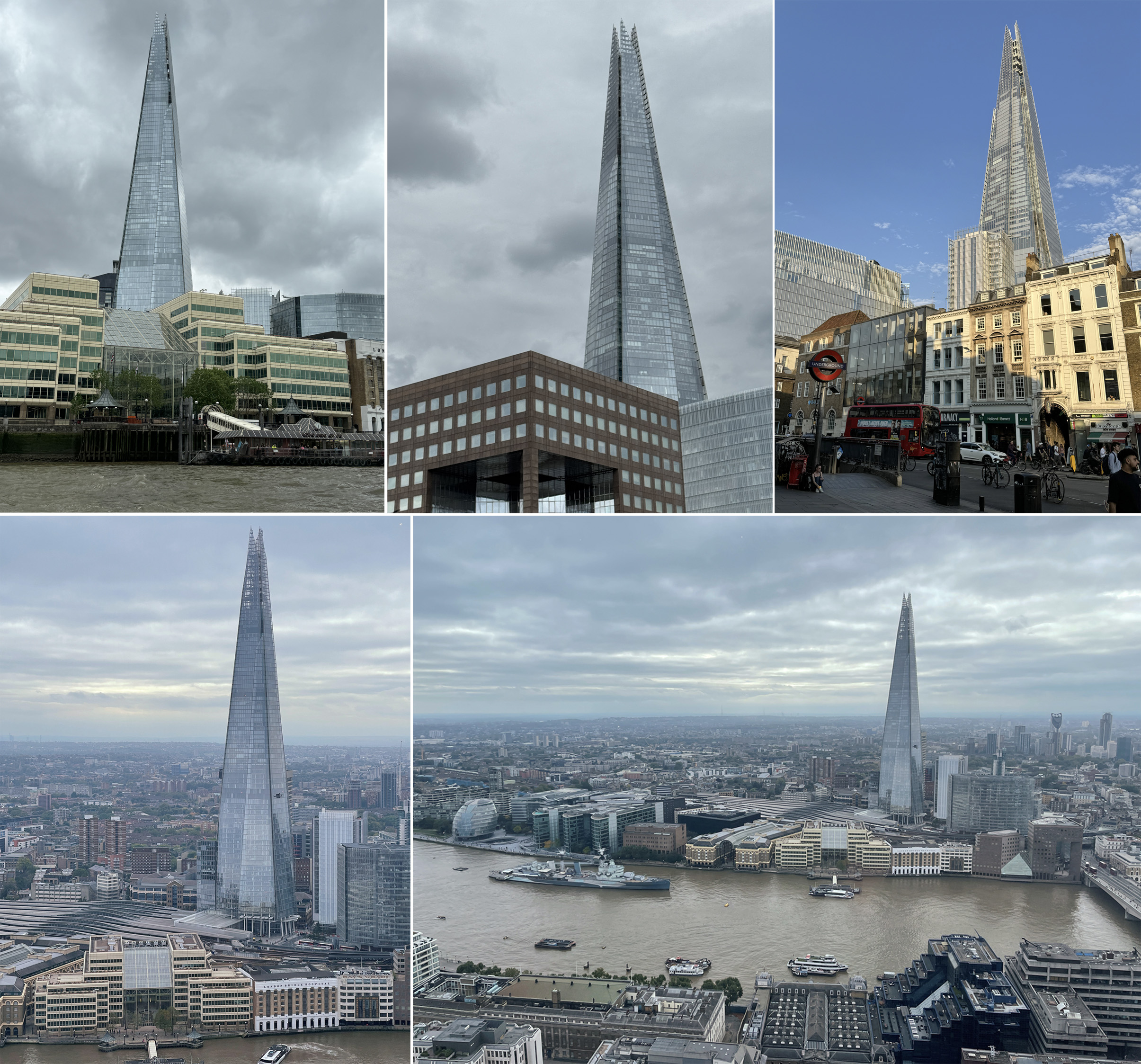
The Shard
It would be hard to dispute the claim that The Shard is the most distinctive building adorning the London skyline as well as the highest. The 72 floor mixed-use pyramid shaped skyscraper was completed in 2012 and is the tallest building in Western Europe at 309.6 metres. The viewing platform on the 72nd floor gives extensive views, but the Bar in the Shangri La Hotel on the 52nd floor provides a free view and expensive drinks!
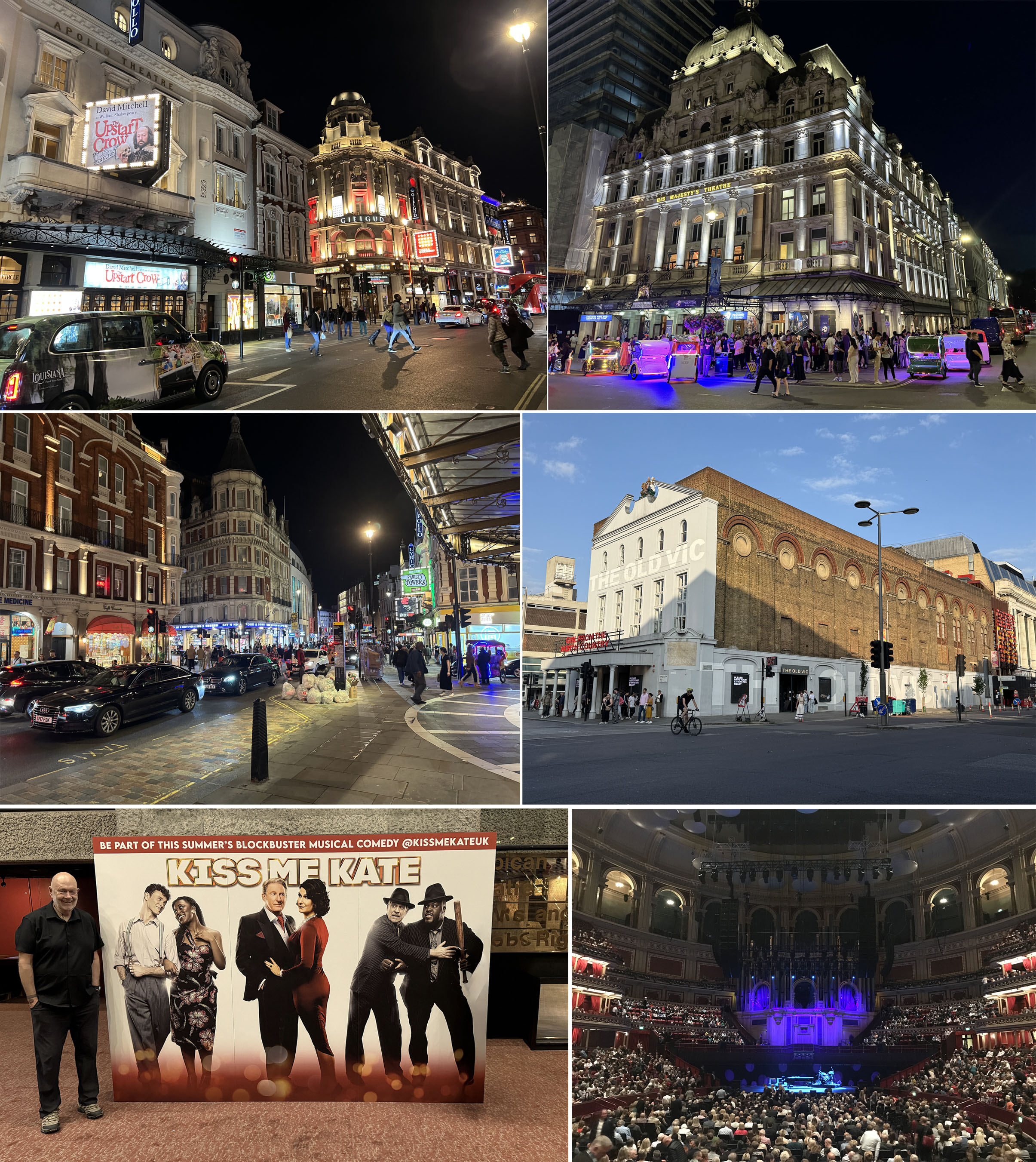
Theatreland
The West End of London, or Theatreland, has no rival on the planet for both the quality and quantity of live productions. Only Broadway in New York comes close! However, the range of productions in the West End is without parallel, including Drama, Shakespeare, Musicals, Revivals, Comedy, Opera, and Ballet. And an important tip: If you are not bothered about what you see, just go to the Half Price Ticket Booth in Leicester Square on the day, or even easier, to their online presence TKTS London. You will find a range of options for at least 80% of the productions showing in London on any given day, with ticket prices discounted from 20 to 50%.
Tower Bridge
If the London Eye and the Shard represent 21st-century London, it is surely Tower Bridge that joins Big Ben, St Paul’s Cathedral, and Buckingham Palace as the four most famous landmarks that most visitors want to ‘tick off’.

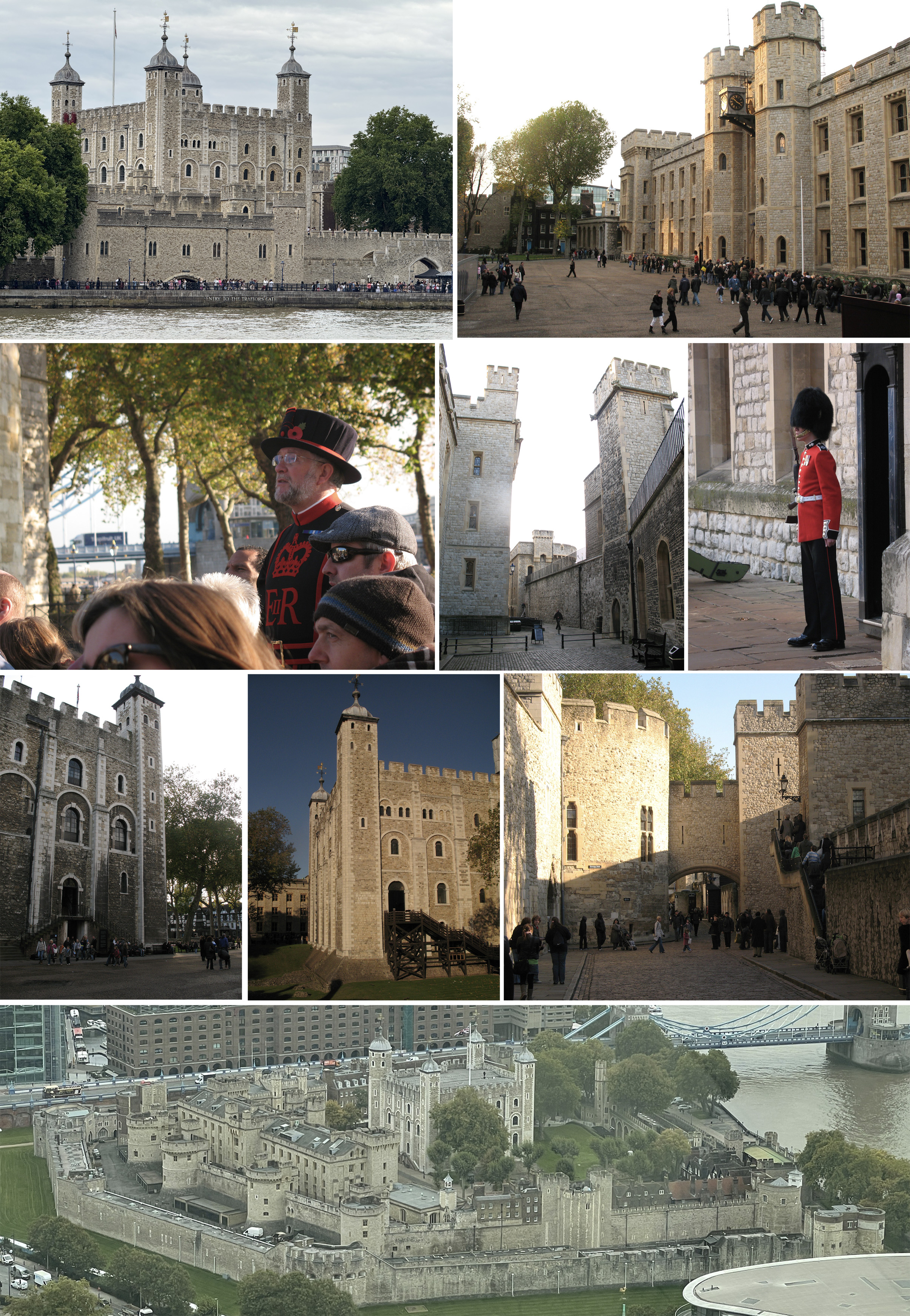
The Tower of London
The Tower of London has played a prominent role in English history and dates from 1078. It has served as a Royal Residence, a grand palace, a prison, an armoury, a treasury, the home of the Royal Mint, and the home of the Crown Jewels. The Tower now comprises a complex of buildings within two concentric rings of defensive walls and a moat, and it has often played a pivotal role in English history, often besieged, and it was said that whoever controls the Tower controls England. Today, it is a popular attraction in the United Kingdom in regard to visitor numbers.
And Finally ………………….
………… it might not be my favourite city as both Vancouver and Sydney fight for that honour, but there is no doubt that there is so much to see in London, with something for everyone.
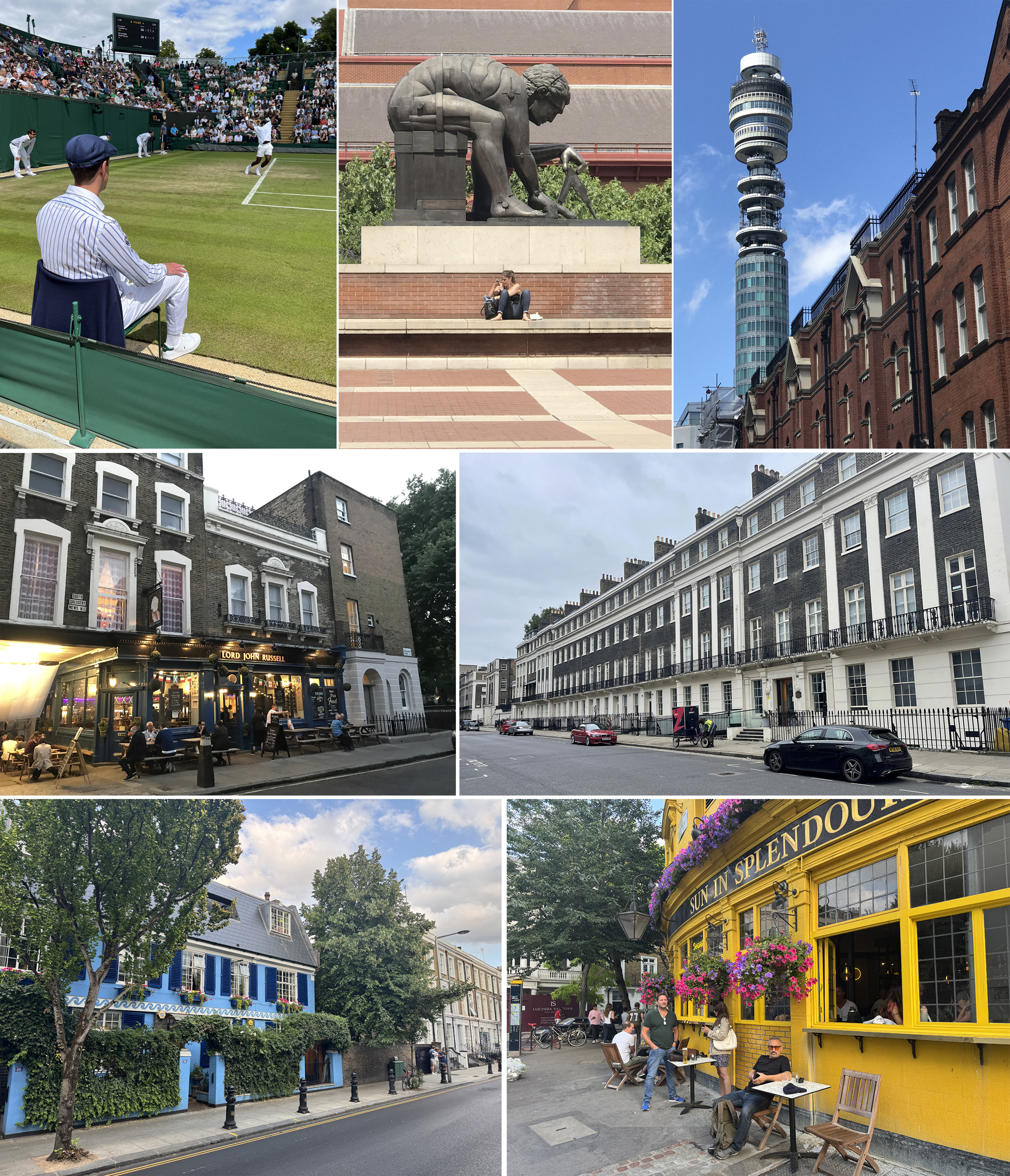
I hope the images above have given you a taste or reminder of what London has to offer, with countless Parks, Markets, Museums, Statues, Cemeteries, and Architectural splendours and curiosities, as well as all the headline attractions.
Sadly, I will be lucky to tick off but a fraction of the explorations I would like to pursue in London, but anything is better than nothing, so I will certainly try and explore a few new areas and attractions each year.
©Michael Bromfield 2025
 Notes from a Nomad
Pingback: 90 – ‘Slowing Down in Mürren August 12 – September 21 2024 | Notes from a Nomad